
Current Projects

Aviationland: Heathrow and the Making of an Airport Landscape
I have just published Aviationland: Heathrow and the Making of an Airport Landscape (June 2026) with the Paul Mellon Centre. The book looks at landscape, architecture and infrastructure in and around Heathrow and asks how the local and the global relate in this area. It first goes back two hundred years to when the common waste land of Hounslow Heath extended across the area, and then forward to the airport’s siting there, to its initial planning and first buildings, its problems of congestion and need for new terminals, the way both glamour and detention were designed into it, and the building of Terminal 5.
The book is just as much a study of the area around the airport and how this has been impacted upon, so there are chapters on other forms of industry, on noise pollution, and on business parks north and south of Heathrow. Based on extensive research in many archives and local libraries, the book uses a range of contemporary published sources including early airport guidebooks, aviation industry literature, planning reports, architectural journals, and so on. My visual resources range across prints, paintings, films, photographs, maps, and various images of architecture, many of which are reproduced in the book. The research has involved extensive visits to Heathrow and its surroundings, which I also know from my childhood. Sometimes these areas are desolate and polluted, sometimes drastically re-landscaped, sometimes given over entirely to aviation needs, and sometimes – as in the modern sublime of certain landscapes and the adaptiveness of local schools – oddly inspiring.

The Maunsell Forts
My continuing interest in the poetics of infrastructure has led to an article on the Maunsell forts off the coast of Kent and how they have been represented and reacted to since their wartime use. These are extraordinary objects – concrete and metal superstructures on concrete pontoons, which were floated out and then sunk so that they stood on sandbanks beside the main channels through the Thames estuary. They have been seen both as ‘industrial-era Stonehenges’ and as ‘cybernetic entities’. There is some fascinating material on the later history, in terms of the architecture culture’s reactions to them, political and legal difficulties, popular culture representations, and their use as pirate radio stations (in one case becoming the independent territory of Sealand).

Monuments and Colonialism
Monuments to colonialism are still common sights in London but increasingly these are being modified or mediated in new ways as debates about them have increased over the recent past. There are also many anti-colonial monuments, or monuments to figures and events of an anti-colonial provenance, and some of these long pre-date these recent debates.
The subject has implications for how we determine what goes into public spaces, or spaces visible from public spaces. I will be teaching this subject this year as part of the Yale in London programme, and I want to write a short book about it.
Other Projects
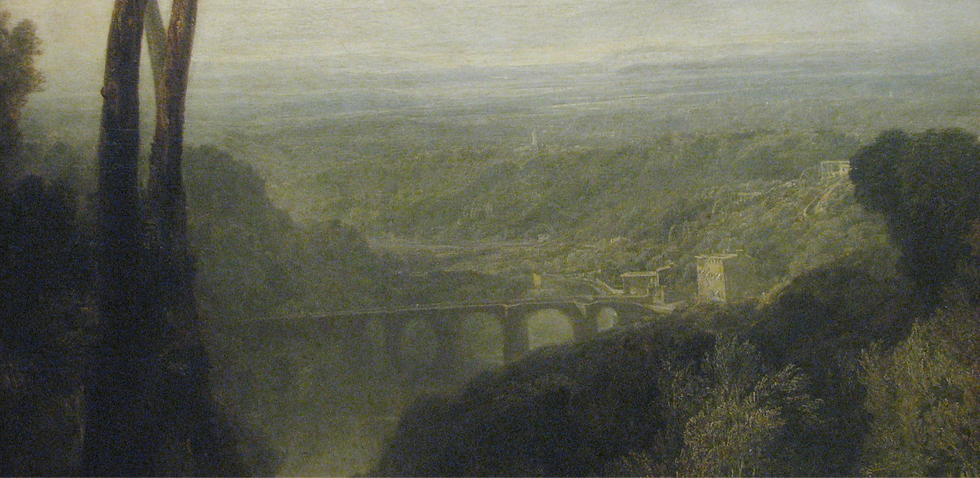
I also have two projects on the go that are much more shapeless at the moment. One is about horizons, both how they have been thematised in certain works of art and how they are recurrent metaphors in philosophy and political thought.
The other project is about description and how it has functioned as a mode through which we apprehend art and architecture principally, but also of course other phenomena.